Vermicompost vs Farmyard Manure: Key Differences for Farmers
Farmers have used farmyard manure, often called FYM, for generations. Vermicompost is a newer term for many growers, though the idea of using worms to process organic waste is also old. Both are organic inputs, and both can have a place in soil management. Understanding how they differ helps you choose what suits your situation.
Where they come from
Farmyard manure is typically made from animal dung mixed with bedding material and crop residues. It is usually decomposed in heaps or pits, and microorganisms do most of the work.
Vermicompost is made by feeding suitable organic material to earthworms, which process it along with microorganisms in a managed bed. The worms play an active role in breaking the material down.
How the process differs
Farmyard manure can take a long time to decompose fully, and its quality depends heavily on how the heap was managed. Vermicompost is generally produced in a more controlled, shorter cycle, with moisture and aeration kept in a workable range.
Neither process guarantees a particular nutrient level. The composition of both products depends on the source material, so the same label can mean different things from different producers.
Texture and handling
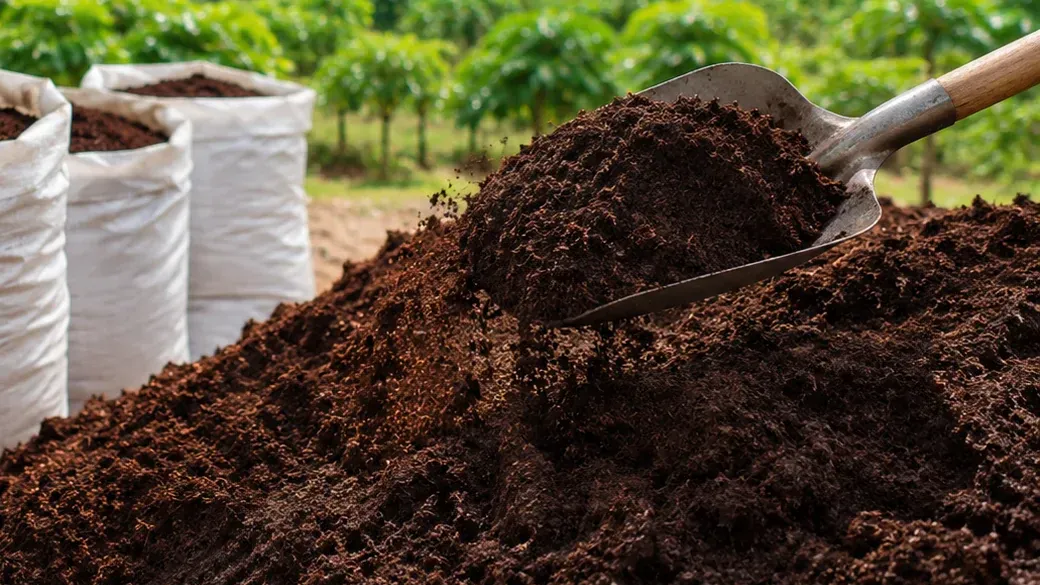
Vermicompost is usually finer and more crumbly than well-decomposed farmyard manure, which can be coarser and more fibrous. This can make vermicompost easier to spread evenly and easier to mix into a nursery medium. Farmyard manure is bulkier and is often applied in larger quantities.
Both should be stored in a dry, shaded, covered place. Wet, unprotected material can lose quality and attract pests.
Which should you use?
There is no universal answer. Consider:
- Your soil. A soil test and an agronomist’s advice will tell you more than any general comparison.
- Your crop and scale. A home garden, a nursery and a coffee estate have very different needs.
- Availability and cost. Compare quotations for the same quantity, packaging and delivery terms.
- What you already use. Many growers combine organic inputs rather than choosing just one.
For most growers, the useful question is not “which is better?” but “how does this input fit my soil management plan?”
Next steps
If you are considering vermicompost, read our product page or send us your requirement. We will share product details and a quotation based on your quantity and location.