- Stage 1
Organic materials
Plant residues and other suitable biodegradable matter are the starting point. What goes in strongly shapes what comes out, so material selection matters.
- Stage 2
Earthworm activity
Earthworms feed on the organic matter and break it into finer particles as it passes through their bodies, working alongside microorganisms in the bed.
- Stage 3
Compost development
Over a managed cycle, the material settles into a dark, crumbly, earthy-smelling compost. Timing depends on conditions and the material used.
- Stage 4
Soil application
Vermicompost is worked into soil or used in growing media as part of a planned program, supporting the root zone where healthy crops begin.
Vermiculture: how organic matter becomes a soil input
Vermiculture is the practice of using earthworms to process organic matter. This page explains the general process in plain language, so farmers and buyers can judge what they are buying.
What vermiculture is
Earthworms feed on organic matter and break it into finer material as it passes through their bodies. Microorganisms in the bed continue the work. The solid output is vermicompost, and the liquid that drains through the bed is vermiwash.
The general process
The steps below describe vermiculture in general. Individual producers differ in materials, equipment and timing.
Prepare the feedstock
Select suitable biodegradable material and prepare it so the worms can work through it.
Set up the bed
Lay out the bed so that moisture can be controlled and air can move through the material.
Introduce earthworms
Add earthworms to the bed. They feed on the material and begin processing it.
Maintain conditions
Keep moisture, aeration and shade in a workable range while the material is processed.
Mature and harvest
Allow the material to mature, then separate and prepare the compost and any liquid for use or packing.
Factors that shape the result
- Feedstock: what goes in strongly influences what comes out.
- Moisture: too dry or too wet slows or stops the process.
- Aeration: beds need air to keep the biology active.
- Temperature and shade: extremes can stress the worms and slow decomposition.
- Time: maturation takes as long as it takes. Rushing it usually shows in the product.
From Nature to Nourishment
A general look at how organic matter becomes a soil input. Specific details of our production are shared directly with enquiring buyers.
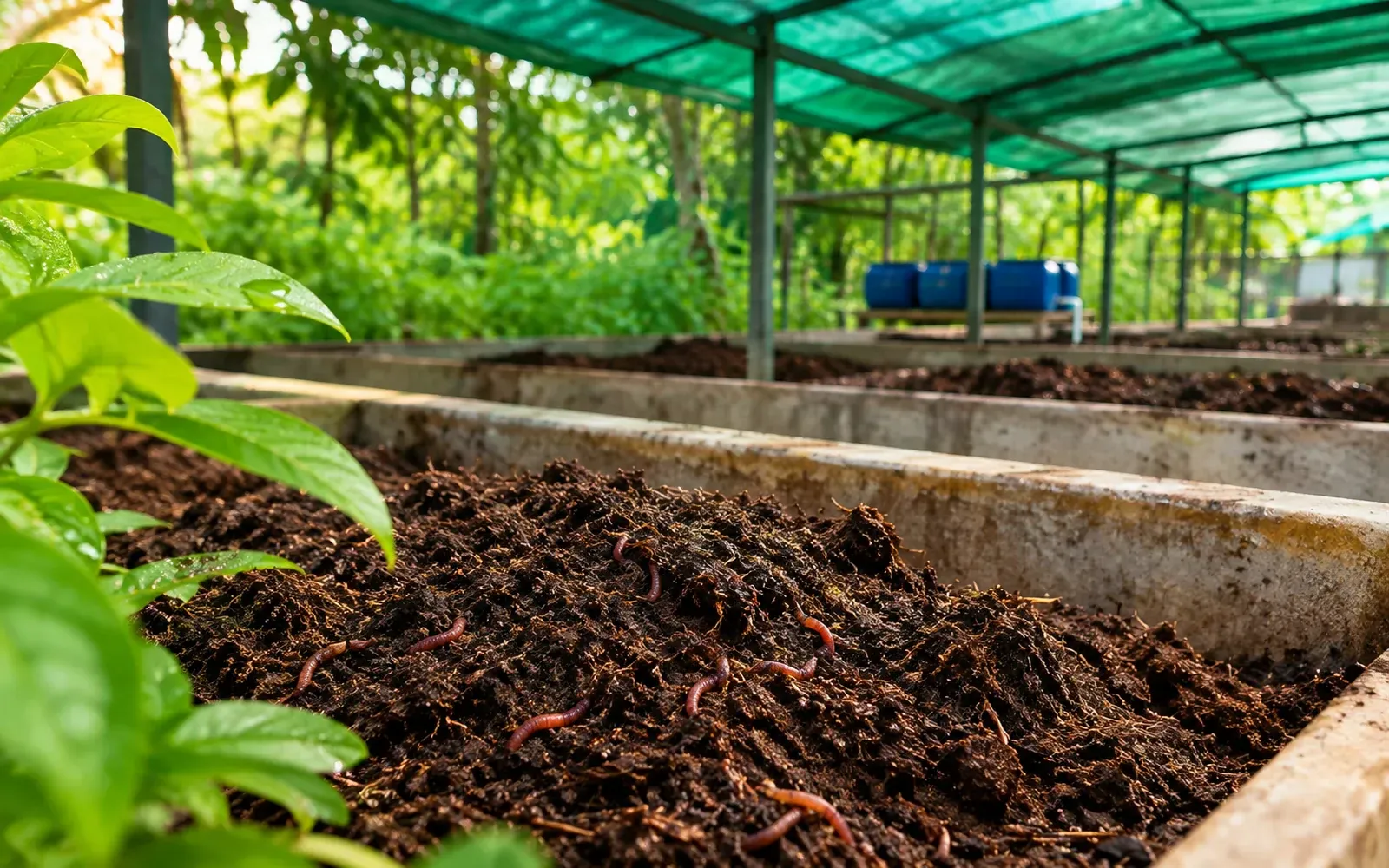
About our production
The steps above explain vermiculture in general. Organic Sakleshpur's production facility is in Ballupete, Sakleshpur Taluk. We will share specific details about our process and quality checks with buyers who enquire. We do not publish claims we cannot yet support.
Questions to ask any vermicompost or vermiwash supplier
- What material is the product made from?
- How is it stored and packed, and how long should it be kept?
- What documents or test information can you provide for my requirement?
- What guidance do you give on use, and do you recommend a soil test first?
- What quantity, packaging and delivery options are available for my location?
Honest suppliers will answer these questions clearly, and will tell you what they do not yet know.